The Insider's Guide to Timing a British Elite Boarding School Application
Updated: Jul 24

Introducing the New Tool That Makes Getting Started Simple.
Imagine your child walking through the gates of Eton College, Harrow School, Cheltenham Ladies College or Winchester College on their first day as a pupil. For many of the world's most ambitious families, this is not merely a dream; it is a carefully planned destination. Yet for every family that secures a coveted place at one of Britain's great boarding schools, there is another that simply ran out of time.
The uncomfortable truth about elite British boarding school admissions is this: by the time most families feel ready to begin, the most prepared families are already years ahead. At Independent Education Consultants, we have guided high net worth families from across the UK, Europe, Asia, Africa and the USA through the British independent school system for many years. Though our services are bespoke and child-focussed, the single piece of advice we give every family at the start, regardless of where they are in the world, is always the same: start your applications earlier than you think.
What Makes British Elite Boarding School Admissions So Competitive?
Britain's most prestigious boarding schools occupy a unique position in global education. Eton College, Harrow School, Winchester College, Cheltenham Ladies College, Wycombe Abbey, Rugby School and Wellington College are not simply outstanding schools; they are institutions whose alumni shape governments, global businesses, the arts and public life across the world. Demand for places at these schools consistently and significantly outstrips supply, and their admissions processes reflect that reality with considerable rigour.
What many families do not fully appreciate until it is too late is that registration deadlines at the most selective schools bear almost no relationship to the point at which a child arrives as a pupil. At Eton College, Harrow School or Winchester College, where competition for places each year is exceptionally fierce, boys are registered by age 8 or 9. However, in many cases, registration and hence preparation for entry tests begins earlier than this. For Wycombe Abbey and Cheltenham Ladies College, early registration is equally strongly advised for families who are serious about securing a place.
For families based outside the United Kingdom, navigating these requirements without specialist support from either a British prep school, or an education consultant if you live overseas, is extraordinarily difficult. A qualified British boarding school consultant does not simply point families in the right direction; they manage the entire application process, from initial registration through to offer and acceptance, ensuring that no deadline is missed and no opportunity is overlooked.
How Does the British Boarding School Entry and Testing Process Actually Work?
This is one of the questions we are most frequently asked by both UK and international families, and it is important to understand it clearly. British independent boarding schools typically admit pupils at three main entry points: 11 plus, 13 plus and 16 plus, which is Sixth Form entry. Each entry point has its own assessment pathway.
11 Plus Entry: Several leading boarding schools, including Cheltenham Ladies College and Wycombe Abbey, admit girls at age 11. Assessment typically involves school-specific written examinations in English and mathematics, cognitive reasoning tests and an interview. Families should expect to register and begin formal preparation at least two to three years in advance of the intended entry date.
13 Plus Entry: The 13 plus entry point is the primary gateway to many of Britain's elite boarding schools, including Eton College, Harrow, Rugby, Wellington College and Winchester College. The assessment process for 13 plus entry is multi-stage and can begin as early as age 10 or 11. Most schools require candidates to sit the ISEB Common Pre-Test, a standardised online assessment covering verbal reasoning, non-verbal reasoning, English and mathematics, typically taken in Year 6 or Year 7. Stage two assessments and interviews, in different formats and timelines for each school, can make navigating multiple applications a confusing and anxious time for both child and parents if you are handling this alone. Successful pre-test candidates are then invites to Stage two assessments which often include an interview and are usually attended in-person at the school. For example, Eton College uses its own bespoke entrance test, and then invited candidates attend an interview and school visit assessment day. Winchester College similarly invites selected candidates for interviews. Successful applicants are provisionally offered a place, conditional upon passing the Common Entrance examination at 13, which is set by the Independent Schools Examinations Board and taken at the candidate's current school, or as in the case of Winchester College, the school’s own entry tests. Scholarship examinations, for families whose children may be eligible for academic, music, art or sport awards, run alongside this process and require additional preparation, usually in year 8.
Very important note: The application process for British boarding schools is complex, time-sensitive, and changes school-by-school over time. Your British prep school or your education consultant will give you the most up-to-date details on the registration deadlines, application, pre-test, assessments and interview timeline for each boarding school. If handling the process of applying to British boarding schools alone, please be sure to check the school websites, or even better, talk to each school’s admissions team, to ensure you are aware of their current application deadlines, and the formats for pre-tests, stage one and two assessments and well as the conditions and timing for boarding school offers and acceptances.
16 Plus Sixth Form Entry: Entry at 16 into the Sixth Form represents a significant and often highly competitive opportunity, particularly for international students. Schools usually assess candidates through their own entrance papers, predicted and actual GCSE or equivalent results, a personal statement, a current school reference, and at least one interview. Competition for places is strong, but this entry point remains a popular pathway for many international families who were not keen to consider British boarding schools for their children at a younger age.
Why Understanding the UK School Year Ages Is the Essential First Step
Our most frequently asked question when we begin our education consultancy work with families who are planning to make a British boarding school application is, ‘Which UK private school year is my child in?
This is more complicated than it sounds. The British academic year runs from September to August, and a child's year group is determined entirely by where their date of birth falls within that window. The US, Australian and other ‘Grade’ systems rarely align number wise with the UK. For international families accustomed to different academic calendars and grades, whether in the United States, Asia, the Middle East or elsewhere, this creates understandable confusion.
A child born in October and a child born the following August will find themselves in the same UK year group, with the same elite British boarding school pre-test schedules, registration deadlines and interview timeline as a result.
Misunderstanding the British school entry year ages can cause families to miss critical registration deadlines or approach schools at entirely the wrong stage of the admissions cycle.
We have never been busier supporting families making late applications and negotiating late places for their children. The best advice I can give you is to get in touch with us in plenty of time ahead of your proposed entry year. (As a guide, when your child is age 9 or 10 for entry into a UK elite boarding school at age 13. Then, we have time to talk you through the timelines and to form a strategy to help you to choose your schools, as well as plan your registration, application and entry test timeline in a more structured way, reducing any anxiety and pressure your child may feel to a minimum. Preparation and being organised is key.
Introducing whatschoolyear.co.uk. Intelligent Boarding School Planning Starts Here
We are delighted to announce the launch of whatschoolyear.co.uk, a simple yet informative new tool created for UK and international families who are serious about planning a British boarding school education for their child.
Enter your child's date of birth and the app immediately identifies which UK school year your child currently belongs to. It then delivers personalised, stage-by-stage guidance and expert tips covering every year of the British school timeline, giving you a clear and actionable picture of exactly what you should be doing right now to keep your child's boarding school ambitions firmly on track.
Whether you are a family in London considering elite UK boarding schools for age 13 entry, a family in Bermuda or Europe whose child is approaching pre-test age and you are beginning to explore the British independent school system seriously, or a family in Singapore whose teenager is considering Sixth Form entry at a leading British school, whatschoolyear.co.uk explains to you exactly where you are now, and gives you the clarity to move forward with confidence.
Important note: Application processes and timelines change all the time. It’s always wise to get in touch with us to a range a complimentary call so our experts can ensure you have the most up-to-date details on elite school entry test timelines.
Your Child's British Boarding School Journey: What to Do and When
Every child's path to a British boarding school is unique, but the broad framework of the admissions calendar is consistent. Here is what families should expect at each stage:
Ages 5-7: Reading books is crucial. If your child loves to read, their vocabulary and comprehension skills will build over time, allowing them to cope well with pre-test and entry assessments in future. If English is not your first language, making sure your child’s spoken and written English is as fluent as possible should be a priority, perhaps by attending a British international school in your home country.
Ages 7 to 9: Parents should focus on starting to visit schools, attending school open days and building a genuine understanding of which boarding school environments will best suit your child's character, learning style, talents and academic abilities. Schools are about people, so meeting the key people helps you decide if you can picture your child in that school. For international families who cannot easily travel to the UK for open days, a specialist British boarding school consultant like us can provide invaluable guidance, virtual school introductions and up-to-date school knowledge that no prospectus or website can fully convey. A longlist of schools should be established and kept under regular review. If comparing British boarding schools with boarding schools in the USA or Switzerland, visiting the schools will clarify what feels best for your child and family. Some gentle academic test preparation can begin, building confidence with literacy and numeracy skills. Learning a musical instrument, singing in the choir, acting or sporting involvement begin to build skills and achievements, as well as inspiring new interests which will differentiate your child from other candidates. Make yourself aware of boarding school registration deadlines and submit your formal applications to your final shortlist of schools in plenty of time. Working with an education consultant ensures you have help to manage your application timeline at each step and don’t miss key deadlines.
Ages 9 to 10: Registrations all submitted, academic preparation now becomes a key priority. Families should understand which pre-tests their child will be required to sit, including the ISEB Common Pre-Test, dates and deadlines, and begin structured preparation accordingly. Your education consultant will help you to register your child to take the ISEB prep-test, sharing their ID with your shortlist of schools, as well as help you to appoint the right experienced tutor, with a proven success record, for your child. A firm boarding school shortlist should be in place and formal applications, managed by your consultant, should be underway. For Eton College, the King's Scholarship and other scholarship examinations such as Winchester College Election or Harrow Scholarship papers, early and dedicated preparation is crucial. Consider moving your child to a British boarding prep school as they are the experts with elite boarding school entry preparation, allowing your child to take things in their stride. Their strong school relationships may come in handy if your child ends up on the waiting list for your first-choice elite boarding school. Our education consultant and admissions experts can assist you to select the best boarding prep school for your child. One which feeds regularly into your chosen elite British boarding schools, and which has a large boarding community, especially if you live overseas.
Ages 11 to 13: This is the period during which the 13 plus admissions process reaches its most intensive phase. Pre-tests, stage two assessments and interviews, provisional offers, waiting list juggling, place acceptances, scholarship exams and interviews, all happen during this time. Preparation for Common Entrance or school-specific entrance examinations should be well advanced. Late applications are possible and something we help client families with on a regular basis. However, families who are only beginning to engage with the process at this stage are already at a significant disadvantage at the most selective schools, though strong candidates can still find excellent options with the right professional support. Get in touch as soon as possible, so we can help you navigate the late application route.
Age 13: Elite boarding school education begins. Prepare your child well for boarding and if you live overseas, ensure you have effective guardianship support in place.
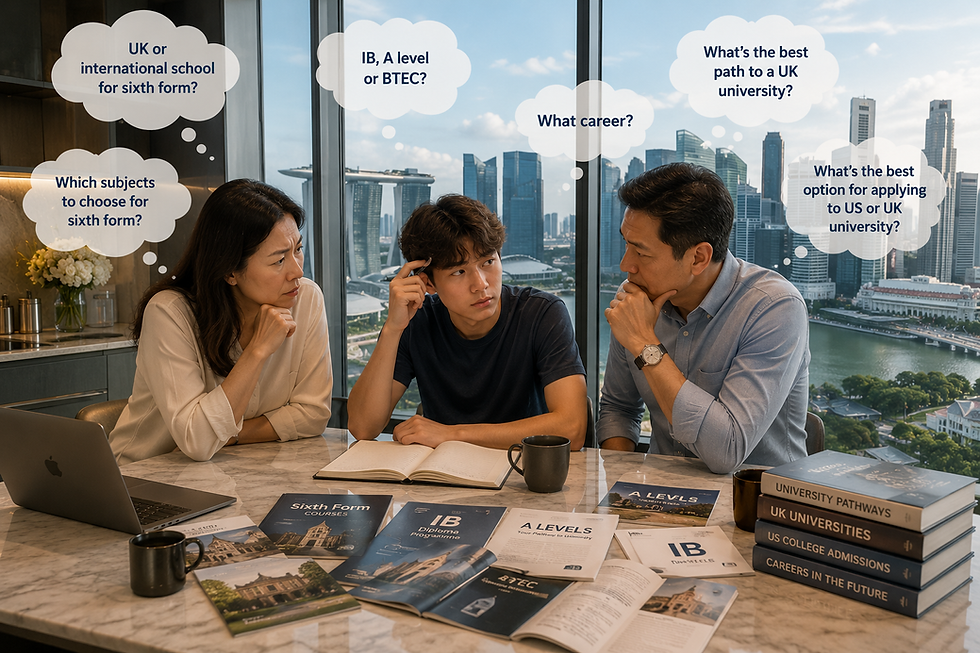
Ages 15 to 16: Sixth Form entry to top British boarding schools at 16 plus is a route that deserves serious consideration, particularly for international families. Many of Britain's leading boarding schools welcome exceptional international candidates into their Sixth Forms, and the two-year Sixth Form experience, culminating in A Level or IB qualifications that are recognised and highly regarded by universities worldwide, can be genuinely transformative. Early engagement with schools and a polished, professionally supported application are essential. Working with an education consultant will ensure your child is well prepared for the competitive field that is sixth form entry.
Plan With Confidence, Choose with Expertise
A place at one of Britain's elite boarding schools is among the most significant and transformative investments a family can make in their child's future. The education, the lifelong friendships, the values, the university destinations and the global professional networks that flow from a British independent school experience are, quite simply, without parallel anywhere in the world.
The families who secure these places do not do so by chance. They plan meticulously, seek expert advice early and understand that in British boarding school admissions, timing and preparation are everything.
Visit whatschoolyear.co.uk today to calculate your child's UK school year and receive your personalised, stage-by-stage planning guidance. Then contact the team at Independent Education Consultants for a confidential conversation about how we can help your family secure the British boarding school place your child truly deserves.
If this piece on UK Boarding Schools has made you think considering British boarding schools could be the right option for your child, we offer a complimentary call for all families so we can explore this discussion further on an individual family basis. During the call we will ask you about your child, and your ambitions for their education. Then, we discuss how we are best to help you navigate the often-confusing waters of choosing, applying and securing an offer of a place to join the best British boarding school for your child and family.
Get in touch with us to find out more.
Or chat with us via WhatsApp if you need some help.