The Insider's Playbook: UK Education for American Military Families living in Britain

If you’re reading this blog, most likely, you already have children settled in a DoDEA school, a UK state or international school, or a UK private day or boarding school.
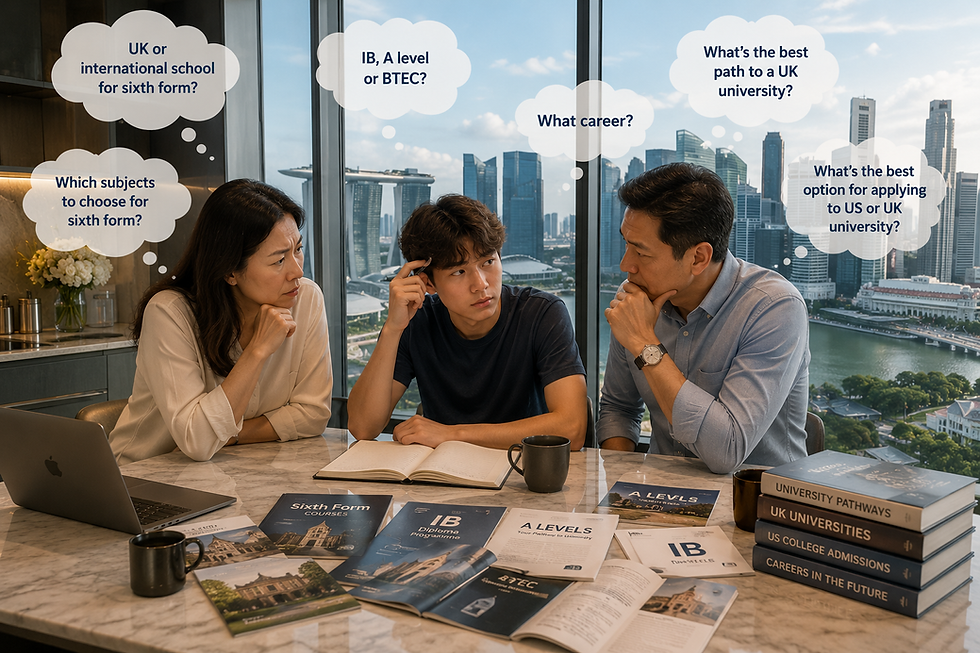
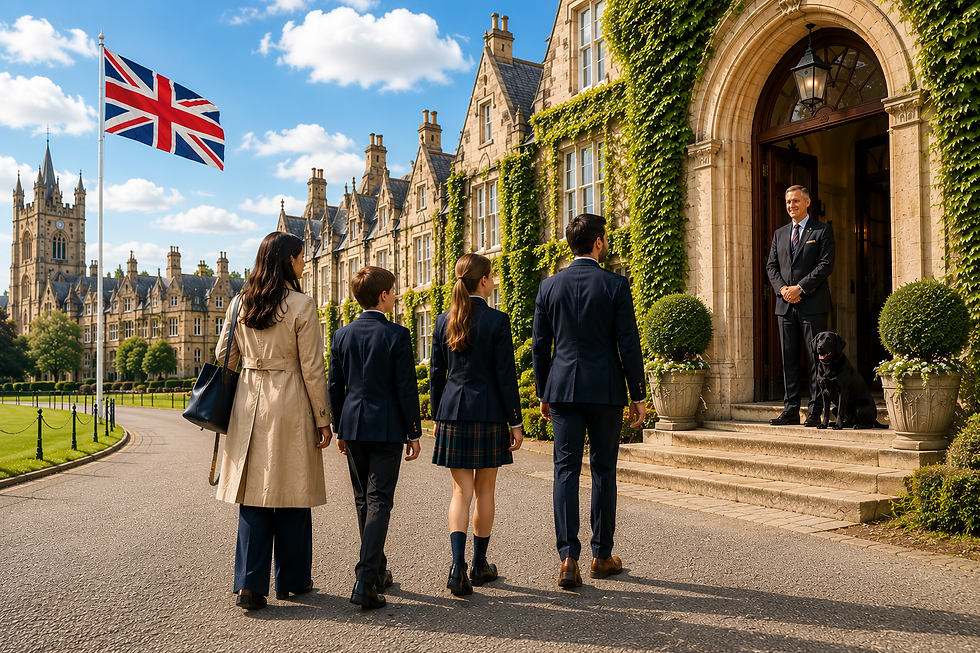
This guide is for families who might be considering a change, whether that is moving into a UK private day school while you are posted here, exploring your options for a UK boarding school so your child can stay in one school through a future military move. For example, applying for a sixth form UK boarding school place is a popular choice, as your child can remain in the UK to complete A-levels or IB, even if your posting returns to the US.
You might also be keen to explore a future move of school to a UK boarding school, explore summer courses which nurture talents in sport, music or the Arts, arrange some professional tutoring or learning support, alongside their current school provision.
Our education consultant experts have shared a few tips below which we hope you’ll find helpful to support your education planning and future school choices.
If you have a question about your child’s UK education, please feel free to Chat with us via WhatsApp.
We offer complimentary video calls to all families who we feel might benefit from our help. Our contact page can be found by clicking here.
1. How the UK system works
UK schools are organised into "year groups" rather than US grades, and most children sit GCSEs at 16 in the summer of year 11, and A-levels or IB Diploma at 18 in year 13 (The UK equivalent of the final years of high school). School terms run in three blocks per school year, typically Michaelmas (Autumn), Lent (Spring) and Summer, each broken by a half-term holiday. Longer holiday periods are over Christmas (about 3-4 weeks) Easter (about 3 weeks) and Summer 9about 6-8 weeks).
Many schools, especially private UK boarding schools, place very strong emphasis on developing all-round potential, as well as the best pastoral care through a house system, where a dedicated housemaster or housemistress and tutor look after a child's wellbeing alongside academics.
2. Working out the right UK school year
One of the most common questions our experts hear when starting conversations with our private client families who live in the US, is which UK year group a child should join, since UK and US school years do not line up in a simple way and the cut-off dates differ. To make this easy to understand, we built www.whatschoolyear.co.uk, a free tool where you enter your child's date of birth and it tells you the UK school year and typical age group they would join, so you can compare it straight away with their current US grade.
3. Boarding options that suit military life
Boarding school does not have to mean full-time or term-long separation from family and friends. As you’ll see above, the holidays are lengthy. Options to consider include full boarding, weekly boarding, and flexi-boarding, where a child boards for a few nights a week. Moat schools have exeat or leave out weekends and allow visits home for key family occasions such as birthdays or Thanksgiving.
If you’d like to learn more about UK boarding schools, you can read more blogs here.
If you regularly return to the US while your child is studying at boarding school, guardianship support provides a trusted UK-based family or organisation to care for your child during exeats, half-terms and holidays when you cannot collect them. For families facing deployments or unpredictable postings, UK boarding offers valuable stability and continuity that a single relocation does not disrupt.
4. Timelines and entrance requirements
UK schools often require entrance assessments, along with interviews, confidential reference and school reports. Every school runs a different application process and timeline. Many popular schools register children a year or more in advance. Because military postings can come with limited notice, it is worth starting the conversation about UK schools as early as possible, even before you have firm dates, so options remain open. Seeking help from an education consultant who will advocate for your child is often wise in these circumstances to get the best school offer outcomes. If you’re in the UK and considering a UK boarding or private day school for sixth form, applications start in year 10, two years in advance.
5. Summer courses: a low-risk way to try UK boarding life
Summer courses at UK boarding schools let a child experience boarding campus life, meet other students and get a feel for the culture and academic style, without committing to a full school year. They are a popular first step for families who are considering a fuller move to UK education later. They are also a cheaper way to experience British boarding life, without the long-term cost. We also help parents with boarding placement f of one term or one year.
Why not start a Chat with us via WhatsApp now so we can learn more about your child and family.
Read more about Summer Courses here.
6. Support for dyslexia, ADHD and other learning needs
UK schools vary in how they support learning differences, but many have a Special Educational Needs Coordinator (SENCo), structured literacy programmes, and exam access arrangements such as extra time or the use of a laptop. This differs from the US system of IEPs and 504 plans, so it is worth understanding a school's specific provision before applying. The right guidance can help ensure your child's needs are properly recognised and supported from day one.
Get in touch to find out how we can help you.
7. Tutoring to bridge the curriculum gap
Children moving between the US and UK systems sometimes need extra support to bridge curriculum differences, particularly if joining partway through a key stage. Tutoring can smooth this transition and build confidence quickly. We can help you to select the right tutor and ensure they are briefed correctly as we understand UK education.
Get in touch to find out how we can help you.
8. Fees, bursaries and financial support
UK independent school fees vary widely by school and boarding type. Many schools offer means-tested bursaries, academic or talent-based scholarships, and some schools offer discounts for forces families. It is worth asking directly, as availability and criteria differ from school to school.
Why not Chat with us via WhatsApp now.
9. Comparing fees: UK private schools versus your current arrangements
According to the Independent Schools Council 2025 census, average UK independent school fees are now around £22,000 a year for day pupils and around £42,500 to £54,000 a year for full boarders, following the introduction of VAT on school fees in January 2025. Fees vary considerably by school, region and year group, and headline fees typically do not include extras such as uniform, trips, music lessons and exam fees, which can add a further 10 to 30 percent.
It is worth weighing this against your current situation. DoDEA schools, including those on base at Lakenheath, are tuition-free for eligible dependents, so choosing a UK private or boarding school is usually an additional cost rather than one covered by your benefits package. Financial support for dependents at non-DoDEA schools overseas is generally limited to specific circumstances, for example where no DoDEA school is available, or certain funded provisions for children with additional educational needs. We would always recommend checking your specific entitlements with your installation's School Liaison Officer or your EFMP point of contact before deciding, and we are happy to help you think through the comparison alongside them. Chat with us on WhatsApp now.
10. Why work with an independent education consultant
Navigating an unfamiliar school system while managing a military posting is a lot to take on alone. An independent consultant like us can help you understand which schools genuinely fit your child's needs and personality, manage timelines and paperwork, and provide continuity of support even if you are reassigned partway through the process.
This guide is provided by Independent Education Consultants. Get in touch to discuss your child's options for UK boarding schools, summer courses, tutoring and learning support.
If this piece on UK Boarding Schools has made you think considering British boarding schools could be the right option for your child, we offer a complimentary call for all families so we can explore this discussion further on an individual family basis. During the call we will ask you about your child, and your ambitions for their education. Then, we discuss how we are best to help you navigate the often-confusing waters of choosing, applying and securing an offer of a place to join the best British boarding school for your child and family.
Get in touch with us to find out more.
Or chat with us via WhatsApp if you need some help.